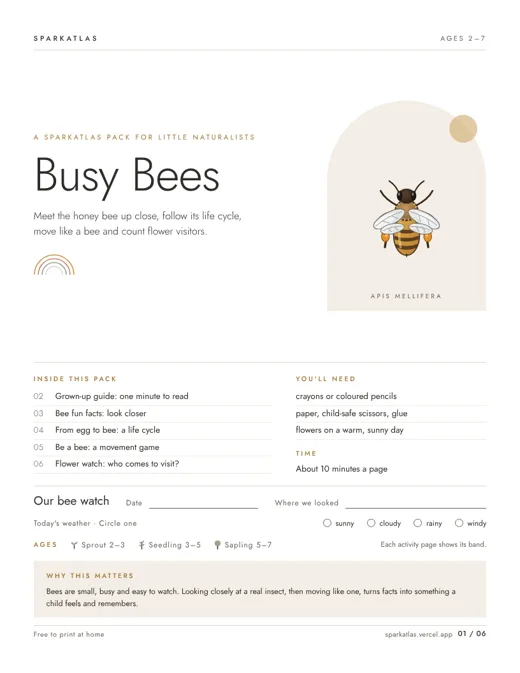
A bee on a flower is one of the easiest wild animals for a small child to watch. It's close, it's busy and it comes back again and again. This pack starts with that real bee and helps your child look closer: at its five eyes, its four hooked-together wings and the pollen baskets on its back legs.
The fun facts come with a picture to point at and a little challenge to try with the body. Then the life cycle goes around a circle from egg to larva to pupa to bee, with cards to cut out and put in order. The Be a Bee game turns the room or the yard into a meadow of paper flowers, with buzzing, sipping, pollen-packing and a waggle dance. To finish, a flower watch asks your child to guess, then count, who really comes to visit.
The youngest point, buzz, fly and colour a flower for every visit. Older children order the life cycle, invent their own bee move and learn to tell a bee from a hoverfly. Every page has an easier way in and a stretch, so siblings can play together.
What’s inside
- 1Cover: what's inside and a field log for your bee watch
- 2Before you meet the bees: a one-page guide for grown-ups
- 3Bee fun facts: six true facts with a challenge to try
- 4From egg to bee: a life-cycle circle and cards to put in order
- 5Be a bee: a movement game with paper flowers
- 6Flower watch: guess, then tally who visits the flowers
Why this matters
Small, true facts with a picture to point at are easy for young children to hold on to, and acting them out makes them stick. Putting a life cycle in order builds sequencing, and guessing before counting is how scientists work. Watching a real flower patch also builds patience and shows that a garden is full of life. Your child sets the pace.
Age bands
Every activity page has an easier and a stretchier way in, marked with these bands:
- Sprout 2–3
- Seedling 3–5
- Sapling 5–7
Letter is the standard paper size in North America; A4 is used almost everywhere else.